
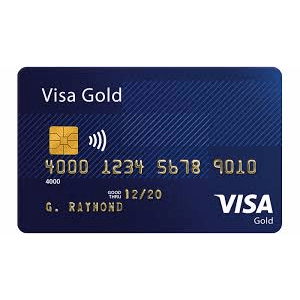
Reloadable Virtual Credit Card by VCCMAROC

Reloadable Virtual Credit Card Highlights
- Card Type: Virtual Visa & Mastercard
- Supply: Debit & Credit Card
- Reloadable: Yes
- Initial Balance: User-defined at checkout
- Currencies: Multi-currency, spend worldwide
- Billing Address: Included with every card
Delivery Details:
Under normal conditions, your virtual card details are delivered instantly upon order confirmation. These include:
- 16-digit Card Number (e.g. 4567 5578 0046 ****)
- Expiration Date (e.g. 05/27)
- CVV Code (e.g. *** )
- The billing address linked to your card
Have any questions? Contact VCCMAROC for full support.
What Is a Reloadable Virtual Credit Card?
A reloadable virtual credit card is a payment card that exists only as a set of numbers. There is no plastic to carry, no PIN pad to use and nothing to lose in a taxi. It carries the same three pieces of information as a physical card — the long number, the expiry date and the security code — and online merchants cannot tell the difference between the two.
The word reloadable is what separates this product from a single-use card. A disposable card dies once its balance reaches zero. A reloadable virtual credit card keeps the same number for its whole validity period, so you can add money to it again and again without changing anything on the merchant’s side. That detail matters more than it sounds: every subscription, every advertising account and every recurring invoice stays linked to the same card, and nothing breaks when you top it up.
Because the reloadable virtual credit card is prepaid, you can only ever spend what you have loaded onto it. There is no overdraft, no interest and no monthly statement to reconcile. For most people, that is the point. It turns online spending into something finite and predictable, instead of a tap that stays connected to a bank account.
The cards issued by VCCMAROC run on the Visa and Mastercard networks, which means acceptance is not a question of geography but of whether the merchant takes those two brands. In practice, that covers the overwhelming majority of the web.
How Your Reloadable Virtual Credit Card Works
The process is deliberately short. There is no application form, no waiting for a decision and no shipping delay.
- Choose your card type. Pick Business or Personal depending on whether you need recurring payments or a one-time purchase. The comparison table further down explains the difference in detail.
- Set your starting balance. You decide how much money the card carries on day one. There is no fixed package to fit into.
- Complete the payment. Checkout accepts several methods, including cryptocurrency for customers in countries where card payments are restricted.
- Receive your reloadable virtual credit card by email. Under normal conditions this happens within minutes. If our team needs to verify the order, the details arrive within 12 hours.
- Start paying online. Enter the card number, expiry date, security code and billing address at any checkout, exactly as you would with a plastic card.
From that point onwards, the card is yours to manage. When the balance runs low, you top it up through the dedicated top-up page and keep using the same number. Nothing is reissued, nothing is cancelled and no merchant has to be updated.
Where You Can Use Your Reloadable Virtual Credit Card
Because every card is issued on the Visa or Mastercard network, it is accepted on any site that takes those two brands. Customers most often use their reloadable virtual credit card for:
- Online marketplaces such as Amazon, eBay and AliExpress
- Advertising platforms including Facebook Ads, Google Ads and TikTok Ads
- Subscriptions like Netflix, Spotify, Adobe and Microsoft 365
- Web hosting, domain names and SaaS tools billed monthly
- Account funding and verification on payment platforms
- Freelance marketplaces where you pay contractors or platform fees
- App stores and digital goods, including game credits and software licences
Advertising is the single most common use case we see. Ad platforms bill unpredictably: a campaign that spends fifty dollars one week can spend five hundred the next. Running those charges through a reloadable virtual credit card puts a hard ceiling on the damage a runaway campaign can do, because the platform can only ever draw what is loaded on the card.
Keeping your online spending on a separate card also protects your main bank account. If a merchant is compromised, only the balance loaded on that card is ever exposed, and you simply stop using it. There is no fraud claim to file against your salary account and no need to replace a card that half a dozen other services depend on.
A small number of merchants refuse prepaid cards on principle, usually car rental companies, hotels taking a deposit and a few banks. That restriction is set by the merchant, not by us, and it applies to every prepaid card on the market.
Reloadable Virtual Credit Card vs Traditional Bank Card
Most people arrive here already holding a bank card, so the honest question is what a virtual card adds. The two products solve different problems.
| Criteria | Reloadable Virtual Card | Traditional Bank Card |
|---|---|---|
| Bank account required | No | Yes |
| Time to obtain | Minutes, delivered by email | Days or weeks, posted to you |
| Exposure if leaked | Limited to the loaded balance | Potentially the whole account |
| Spending ceiling | Whatever you load | Account balance or credit limit |
| In-store payments | Online only | Online and in person |
| Cash withdrawals | Not available | Available at ATMs |
The table makes the trade-off clear. A reloadable virtual credit card is not a replacement for your bank card — it is a shield you put in front of it for everything you do online. Many of our customers keep both and simply stop typing their real card number into websites.
Comparison: Business vs Personal Reloadable Virtual Cards
Both options are reloadable. The Business card is built for recurring payments such as advertising budgets, while the Personal card suits one-time purchases. Choose your version at checkout.
| Feature | Business Card | Personal Card |
|---|---|---|
| Card Type | Fresh (Newly generated) | Dedicated (Specify use at checkout) |
| 2D Secure (OTP) | Can be disabled | Enabled |
| Support Level | Priority | Standard |
| Payment Type | Recurring (ads, subscriptions) | One-time only |
| Reloadable | Yes | Yes |
| Validity Period | 5 Years | 3 Months |
| Reload Limit | Unlimited | Up to $1000 |
| Substitution | Yes (5x/year) | Only if defective |
| Balance Transfer | Free | $5 Fee |
If you are unsure, the deciding question is simple: will a merchant charge this card more than once? If the answer is yes — an ad account, a monthly subscription, a hosting bill — take the Business version. Its five-year validity and unlimited reload ceiling are designed for exactly that. If you just need to complete one purchase, the Personal card does the job at a lower commitment.
How to Top Up Your Reloadable Virtual Credit Card
Reloading takes a couple of minutes and never changes your card number, so recurring subscriptions and ad accounts keep working without interruption.
- Open the top-up page. Use the dedicated top-up product on our store.
- Enter the same email address you used for your first order, so we can match the request to your existing card immediately.
- Choose the amount you want to add and complete the payment.
- Receive confirmation once the new balance is credited to your reloadable virtual credit card.
Using a different email address is the single most common cause of delay. Our system matches top-ups to cards by email, so an unfamiliar address means a member of the team has to check the order manually before releasing the funds. Keeping the same address turns a manual review into an automatic credit.
For amounts above $3,000, please contact our support team before ordering so we can prepare the transfer and avoid any delay. Large loads sometimes require additional verification, and telling us in advance means the money is ready when you need it rather than held while we confirm the order.
A practical habit worth adopting: top up your reloadable virtual credit card slightly before you need the money, not on the day a subscription renews. A declined renewal can suspend an advertising account or cancel a service, and recovering from that takes far longer than a top-up.
Security and Privacy Benefits
Security is the reason most people switch, and it comes from a simple structural fact: a reloadable virtual credit card is not connected to a bank account. Whatever happens to the number, the worst-case loss is the balance sitting on it.
- Your real card stays private. Merchants never see the number printed on your bank card, because you never type it anywhere.
- Losses are capped by design. A compromised virtual card exposes the loaded balance and nothing more.
- Unwanted subscriptions end cleanly. If a service makes cancellation difficult, letting the card balance run out stops the charges.
- Data breaches stay contained. When a shop you used two years ago is hacked, the leaked number is not attached to your salary account.
- Separation of budgets. Keeping advertising spend, subscriptions and personal shopping on separate cards makes each one easy to track.
The Business version adds one option worth understanding: 3D Secure — the one-time password some sites request during checkout — can be disabled. That is useful for automated or recurring payments on platforms that fail when a manual confirmation is required. It also removes a verification step, so treat a card with 3D Secure disabled the way you would treat cash, and keep the details out of shared documents and group chats.
Whichever version you choose, the rule is the same as for any payment method: your card details belong in a checkout form and nowhere else. No legitimate support agent, ours included, will ever ask you to send a full card number and security code over chat.
Who Uses a Reloadable Virtual Credit Card?
The product started as a workaround for people without international banking access. It has become a tool that plenty of people with perfectly good bank cards now prefer.
- Freelancers and remote workers paying for software, hosting and platform fees in foreign currencies, often from countries where international cards are hard to obtain.
- Media buyers and agencies running advertising budgets across several accounts, who need one card per client and a hard ceiling on each.
- Dropshippers and online sellers paying suppliers, marketplaces and fulfilment services without exposing a business account.
- Students and young professionals who need to pay for courses, exam fees or software but do not yet qualify for a credit card.
- Frequent online shoppers who simply prefer never to leave their real card number on a retailer’s server.
- Travellers booking flights, accommodation and local services in advance from abroad.
What these groups share is a need for spending that is quick to set up, limited by design and separate from everything else. A reloadable virtual credit card gives all three without a relationship with a bank, an income check or a credit history.
Validity, Limits and What to Expect
Clear expectations prevent almost every support ticket we receive, so here is what governs your card day to day.
Validity. A Business reloadable virtual credit card is valid for five years from issue, a Personal card for three months. The expiry date is printed in the email you receive, and it is the date merchants will ask for at checkout. When a card expires, its remaining balance can be transferred — free of charge on Business cards, with a $5 fee on Personal cards.
Reload ceiling. Business cards can be topped up without a stated limit. Personal cards accept up to $1,000 in total reloads. If your spending is likely to grow past that, starting on the Business version saves you moving everything later.
Replacement. Business cards can be substituted up to five times a year, which covers the usual reasons a number needs changing. Personal cards are replaced only if the card is defective.
Currency. Your reloadable virtual credit card works with merchants billing in different currencies, and conversion happens automatically at the network rate. You do not need to hold separate cards for dollars and euros.
What the card cannot do. It is an online payment instrument. It cannot be used at a physical terminal, it cannot withdraw cash from an ATM, and it cannot receive incoming transfers as a bank account would.
Common Mistakes to Avoid
Most problems reported to our support team come down to one of the following. All of them are avoidable in under a minute.
- Ordering with one email and topping up with another. The two orders no longer match, and the top-up waits for manual review.
- Entering the wrong billing address. Many checkouts verify the address against the card. Use the address supplied in your delivery email, not your home address.
- Letting the balance fall to zero on a subscription. The renewal is declined, and some services cancel the account rather than retry.
- Choosing Personal for recurring payments. A three-month validity ends mid-subscription, and the $1,000 reload ceiling arrives sooner than expected.
- Loading the entire budget at once. Part of the value of a reloadable virtual credit card is the ceiling it puts on risk. Load what you need for the coming weeks, not for the year.
- Sharing card details in a chat or shared document. Anyone who reads that message can spend the balance, and a card with 3D Secure disabled offers no second line of defence.
Follow those six points and your reloadable virtual credit card will behave exactly as expected from the first payment to the last.
Reloadable Virtual Credit Card FAQ
Do I need a bank account to order?
No. The card is issued independently, so you can order and use it without any bank account, credit check or proof of income.
Does the card number change when I reload it?
No. Your card number, expiry date and CVV stay the same for the whole validity period, which is why subscriptions and ad accounts keep running after a top-up.
How quickly will I receive my reloadable virtual credit card?
Under normal conditions, within minutes of your order being confirmed. If the order requires verification, the details are delivered within 12 hours.
Can I use the card in several currencies?
Yes. Payments are converted automatically at the network rate, so the same card works on stores that bill in dollars, euros or other currencies.
Is the card issued in my own name?
Yes. Your card is issued in your name and comes with its own billing address, which is what merchants check during an address verification step.
What happens if a payment is declined?
A decline usually means the balance is too low or the merchant blocks prepaid cards. Top up your card and try again, and contact our support team if the problem continues.
Can I withdraw cash from my reloadable virtual credit card?
No. This is an online payment card. It cannot be used at an ATM or at a physical payment terminal.
What happens to my balance when the card expires?
The remaining balance can be transferred to a new card. The transfer is free on Business cards and carries a $5 fee on Personal cards.
Can I disable the one-time password (3D Secure)?
On the Business version, yes. It is often necessary for automated and recurring payments. On the Personal version, 3D Secure stays enabled.
Can I order more than one reloadable virtual credit card?
Yes. Many customers keep one card per purpose — one for advertising, one for subscriptions, one for shopping — so that a problem on one never affects the others.
What if I want to load more than $3,000?
Contact our support team before placing the order. Larger loads may need additional verification, and telling us in advance keeps the funds available when you need them.
Ready to order? Select your card type and balance above, and your reloadable virtual credit card will be sent to your email inbox.